

Why lone working is one of the cleaning sector’s biggest safety blind spots, says safety expert
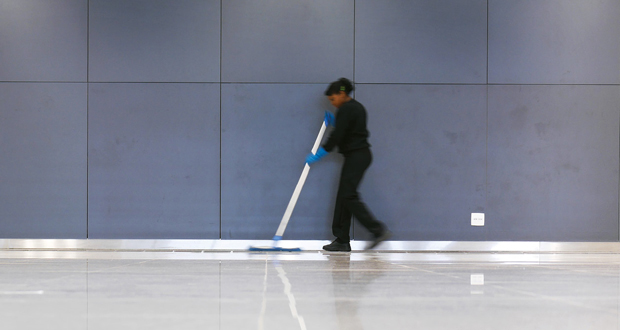
One of the most overlooked health and safety issues in the cleaning sector is lone working, according to leading workplace health and safety expert, Brenig Moore.
Across offices, schools, public buildings, shared spaces, and retail sites, cleaners are often asked to work before and after opening times, or at unsociable hours when nobody is around.
That can create a very different risk profile from other working environments, particularly when tasks involve wet floors, harsh chemicals, manual handling, machinery and travelling between different locations.
HSE says there will always be greater risks for lone workers because there is no direct supervision and no one is immediately available to help if something goes wrong.
For cleaning employers, the biggest issue is that lone working is often treated as normal rather than as something that requires specific controls.
Brenig Moore, Health and Safety Expert at Astutis, commented: “Lone working in cleaning is one of those risks that can become normalised very quickly, and is more often than not just an expectation that comes alongside the role.
“Employers become blasé to the situations that could go wrong, and view these roles as low risk, which can be a huge mistake.
“A cleaner often has no immediate support nearby despite dealing with things like harsh chemicals, dangerous equipment use and wet floors, with slips, trips and falls being a consequence.
“When there’s nobody around to offer immediate help, respond quickly or even call due to the time of day, these issues can escalate into something bigger.”
HSE guidance makes clear that lone working is not automatically unlawful, but employers are responsible for identifying the hazards involved and putting sensible controls in place.
That includes understanding the specific task, the location, the time of day, the worker’s experience, and ensuring that employees know what support is available in an emergency.
However, Moore argues that generic policies are rarely enough. He said: “Too often, lone working is covered by a broad statement in a policy, such as the HSE guidance. However, the real question is whether the employer has properly thought through the practical reality of that person’s shift. Who knows they are there? How do they check in? What happens if they do not respond? Are they carrying out higher-risk tasks alone? Do they know what to do if they feel unsafe? There needs to be a thorough risk assessment, with the employee knowing exactly what to do if something were to go wrong.
“Good lone-worker safety is not about ticking a box. It is about planning work in a way that recognises how quickly a routine cleaning task can become more serious when there is no one else around.
“HSE also advises employers to check the risks and control measures where lone workers are operating at another employer’s premises, which is especially relevant when it comes to contract cleaning.”
The issue has also gained wider attention in workforce safety discussions, with cleaning sector coverage noting that lone workers can be more vulnerable because they may be without witnesses, support or immediate help if an incident occurs.
However, Moore says that the cleaning sector issues are mainly cultural: “The cleaning sector is full of hard-working people who are often working in unsociable environments and at unsociable times.
“That itself can make lone working feel like a standard part of operations but the standard doesn’t mean that it is low risk.
“If the cleaning sector wants to take safety seriously, then lone work needs to be treated as a live operational issue, and not a safety afterthought.
“The businesses that get this right will be the ones that look beyond whether a job got done well enough, and ask whether it was structured safely in the first place.”