

Councils turn to smarter street-cleaning solutions as Britain’s litter crisis deepens
Britain is facing a growing litter crisis, with more than 90 per cent of surveyed urban and rural sites found to contain waste, according to Keep Britain Tidy’s Rubbish Reality report.
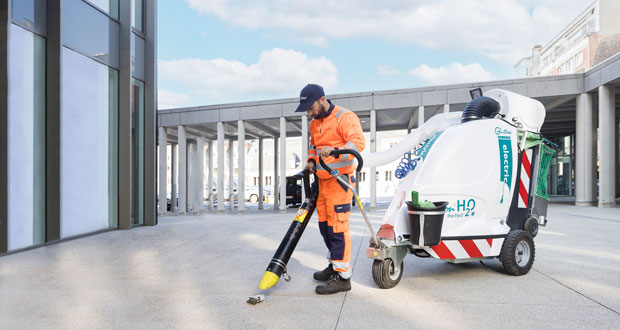
In response, Bradshaw EV, the UK distributor for the Glutton range, is reporting a significant rise in enquiries for its Glutton® Litter Vacuum and Glutton® H2O Perfect as local authorities look for more cost-efficient ways to maintain public spaces.
Urban centres and residential areas are all experiencing increasing waste levels, driven by fly-tipping and a persistent littering culture that shows little sign of slowing down.
The scale of the issue is reinforced by further research from Keep Britain Tidy and YouGov, which found that nearly half of UK adults admitted to littering within the past year.
The findings highlight concerning behaviours – particular that more than 5.4 million people (10 per cent) confessed to leaving packaging behind after eating or drinking, and a further 3.7 million (7 per cent) admitted to abandoning rubbish at transport hubs such as bus stops and train stations.
This comes at a time when local authorities are under mounting pressure to keep streets clean, all in the face of tightening budgets and growing public expectations around cleanliness in public spaces.
Ramsy Labassi, Marketing Manager at Bradshaw EV commented: “Despite having a statutory duty to maintain clean public spaces, what we’re seeing on the ground is that councils are struggling to keep pace with the sheer volume of litter. Currently, it’s estimated that more than 2 million pieces of litter are dropped every day in the UK, equating to approximately 23 pieces of litter per second.
“This escalating challenge is prompting councils to look for more effective ways to operate in dense urban environments and to make better use of the resources they already have in order to get more done. In place of slower, more labour-intensive methods, our Glutton models are at least 10x more efficient, as they allow operatives to collect waste far more quickly through reducing the need for tasks such as repeated bending, individual picking, and bag emptying.
“When put into perspective, this means a single operator can cover significantly more ground in the same amount of time, removing far greater volumes of litter and reducing the need for multiple staff to be deployed on routine cleansing tasks.”
Financial constraints are compounding the issue. Local authorities in England are facing a projected £4.7 billion funding shortfall between 2025 and 2029, largely driven by increasing demand for essential services such as social care and homelessness support. As these critical areas take priority, cleaning services are likely to face further cuts.
As a result, local authorities up and down the country are now seeking smarter, more agile solutions that can deliver a higher output with fewer resources, while also leaning more heavily on community and volunteer initiatives to tackle persistent ‘grot spots.’
Labassi added: “The startling data from Keep Britain Tidy reinforces just how widespread the issue has become, with litter now a persistent challenge across almost every type of public space. What’s particularly concerning is the normalisation of littering behaviours, which is putting even more pressure on already stretched frontline services.
“It’s no real coincidence that in line with the escalating litter epidemic that we’re seeing a clear shift in how councils are approaching street cleansing. There is a growing recognition that traditional methods – most notably ‘man with broom’ – are no longer enough to cope with the scale and rate of litter that’s building up on our streets.
“As such councils are actively seeking out innovative methods to drive efficiencies in their operation by getting more out of what they already have.”
Based on recent data, local authorities in England spend approximately £1 billion annually on cleaning up litter and fly-tipping, covering street cleaning, parks, and public spaces.
“Budgets aren’t going to get any larger, on the contrary, they’re at risk of going the other way, which has resulted in councils having to rethink how resources are both allocated and deployed,” Labassi continued.
“From our perspective, that search needs to focus on investing in efficient solutions which boosts productivity on the ground by helping teams cover more area in a single shift without compromising on standards or having to significantly increase resource or headcount – and that’s where we see the Glutton range transforming how local authorities will tackle Britain’s litter epidemic in the coming years.”