End-of-life Abbee units supporting prison workshop programmes
Abbee Ltd leads the way in responsible end-of-life pathway for end-of-life robotic vacuuming technology
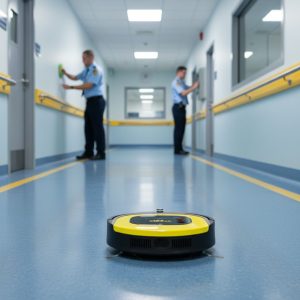 End-of-life Abbee unit components are repurposed for use within UK prison workshop programmes. The initiative focuses on extending product life where appropriate, reducing waste, and supporting structured, supervised activity in a controlled prison environment.
The Challenge
As Abbee’s fleet grows, it’s inevitable that some units reach end-of-life for commercial deployment. These units may no longer meet the performance, service, or support requirements expected for customer sites.
At the same time, prison workshop programmes often require practical equipment to support structured activity and skills-based tasks, while operating under strict access, safety, and compliance constraints.
The objective was to create a clear, responsible process that:
- Prevents usable robotic vacuuming equipment from being disposed of prematurely
- Ensures end-of-life units are handled appropriately and transparently
- Supports a controlled, supervised prison rehabilitation workshop environment
The Approach
Abbee established a straightforward process to identify and prepare end-of-life units suitable for repurposing.
Key principles included:
- Clear classification: Units provided were explicitly end-of-life and not intended for commercial cleaning operations.
- Controlled handling: Units were transferred through appropriate channels and aligned to site requirements.
- Practical value: The units supported supervised workshop activity, enabling hands-on interaction with real equipment.
- Sustainability focus: Where appropriate, repurposing was prioritised over immediate disposal.
Workshop Use: What Participants Do With the Units
Within the workshop setting, the end-of-life units are used for structured, supervised tasks designed to support practical engagement and skills-based activity within a prison setting.
Rehabilitation Value: Skills and Work-Ready Behaviours
Within a supervised workshop setting, working with end-of-life Abbee units supports structured rehabilitation activity by providing practical tasks with clear steps, standards, and outcomes.
Participants can develop transferable skills such as attention to detail, following documented processes, basic fault-finding, and completing work to a consistent standard.
The programme also reinforces work-ready behaviours – turning up, working safely, communicating progress, and taking responsibility for tools and tasks – helping create a more purposeful routine and building confidence through hands-on achievement.
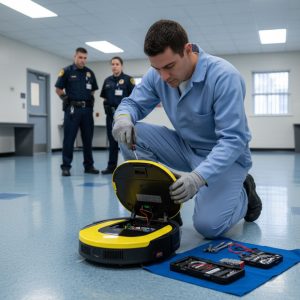 Typical activities can include:
- Initial inspection and condition checks: Identifying visible wear, damage, and missing components.
- Component identification: Learning the purpose of key parts and how they fit together.
- Basic disassembly and reassembly (where permitted): Following a step-by-step process to remove and refit non-sensitive components.
- Cleaning and preparation tasks: Safe cleaning, labelling, and organising parts to support workshop processes.
- Simple fault-finding exercises: Working through basic, supervised checks to understand why a unit may have been retired from commercial use.
All activity is carried out under local supervision and in line with site requirements.
Outcomes
The programme delivered value across three areas:
Reduced waste and improved lifecycle management
Repurposing selected end-of-life units extended their useful life and supported a more circular approach to hardware.
Meaningful use in a controlled environment
The units provided practical equipment for structured, supervised activity, supporting purposeful engagement.
A repeatable end-of-life pathway
The process created a replicable model Abbee can apply as additional units retire from commercial service.
Why It Matters
Responsible product lifecycle management is not limited to performance during active deployment. It also includes thoughtful decisions at end-of-life balancing sustainability, practicality, and compliance.
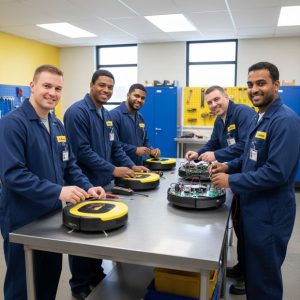 This initiative reflects Abbee’s commitment to reducing unnecessary waste and finding appropriate, controlled ways to extend the value of equipment beyond its commercial lifecycle.
Michael Richardson, Managing Director, Abbee Ltd said: “When equipment reaches the end of its commercial life, it can still have real value in the right setting. Supporting structured, supervised prison rehabilitation activity is a practical way to help people build confidence and work-ready skills. We are proud to be able to utilise EOL Abbee’s for this purpose.”
Sustainability Beyond the Programme
- Abbee’s approach to sustainability extends beyond product lifecycle decisions. Across day-to-day operations, the business prioritises practical steps that reduce waste, including the use of second-hand cardboard boxes for most shipments. This same approach supports the end-of-life pathway: end-of-life Abbee units are packaged and shipped using reused boxes wherever possible, reducing the need for new packaging materials and helping lower the environmental impact associated with distribution.
- Based on Abbee’s reuse impact reporting to date, this approach has delivered measurable environmental benefits, including:
- 22 cardboard boxes reused (running total)
- 0.4 tonnes of carbon saved (running total)
- 1.3 kWh of energy saved (running total)
- 0.4 litres of water saved (running total)
The report also provides equivalencies for the environmental savings achieved to date, including:
- Taking 15 cars off the road for one week
- Filling 1,507 baths with water
- Powering 34 homes for one week
Impact reporting is provided via Reuseabox’s environmental impact reporting https://www.reuseabox.co.uk/, which outlines how savings are calculated and tracked. You can download Abbee’s Reuse Impact Report from Reuseabox here.
How Abbee Robots Support Sustainable Cleaning for Businesses
Abbee robots can also help commercial cleaning teams and facilities reduce environmental impact through more consistent, efficient cleaning routines.
Typical sustainability benefits can include:
- Reduced reliance on manual, repetitive vacuuming: Teams can redeploy staff time to higher-value tasks, helping improve efficiency without increasing headcount.
- More consistent cleaning standards: Reliable, repeatable routines can reduce the need for rework and help sites maintain standards with fewer wasted hours.
- Smarter resource use: Automated cleaning can support better planning and scheduling, helping teams avoid unnecessary cleaning runs.
- Lifecycle thinking: Alongside day-to-day performance, Abbee’s end-of-life pathway supports a more responsible approach to hardware over time.
The Future of Abbee Sustainability
Abbee will continue refining its end-of-life handling process to ensure it remains:
- Appropriate for controlled environments
- Simple to administer
- Scalable as the fleet expands
For more information about Abbee and its approach to commercial cleaning automation and sustainable practices, visit abbee.ltd.