 Cleaning Hygiene Today Cleaning Hygiene Magazine
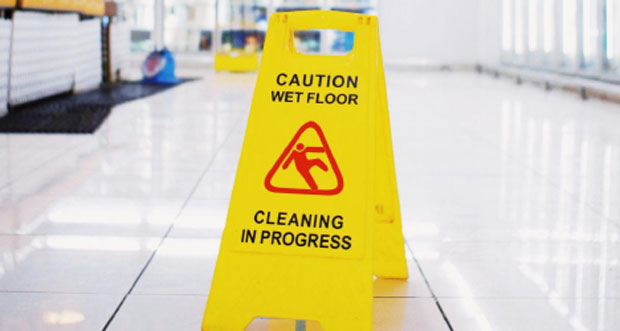
A high-gloss finish is often a mask for a high-risk environment. Even a seemingly shiny floor can hide unseen risks that impact the safety of your workforce, as Cheryl Wallace, European Product & Commercialisation Manager at New Pig explains
Slips, trips, and falls remain the single most common cause of major injury in UK workplaces. They aren’t just HR headaches; they are a financial drain, costing employers approximately £512 million annually in lost production and legal liabilities.
While most point to “poor housekeeping” or “accidental spills” as the culprits, a more insidious threat is hiding in plain sight. Often, the very protocols designed to keep a facility safe, such as daily mopping and high-shine buffing, are the factors making the floor more dangerous and contributing to the accidents and incidents themselves.
It is time for professionals to look past the shine and address the microscopic reality of floor safety.
The hidden threat
Every floor, from brushed concrete to polished marble, exists on a spectrum of friction. Even a surface that feels smooth to the touch is composed of “microscopic mountains and valleys” that provide essential traction that helps guard against a slip and fall incident.
The texture of a walking surface might or might not be visible. Some flooring materials, such as linoleum and laminate flooring, feature textures deliberately added to increase traction. Other surfaces are buffed, brazed, sanded, acid-etched or otherwise treated to increase traction.
This traction is measured as the Coefficient of Friction (COF). However, COF isn’t a static number. It is a living metric that changes with foot traffic, age, and, most critically, cleaning methods. In fact, improper cleaning can quickly make a floor unsafe. When we focus only on how a floor looks, we ignore how it performs.
Improper cleaning increases risk
The most common “hidden” danger is a process called polymerisation.
Improper cleaning leaves behind microscopic layers of dirt and soap residue. Over time, sunlight and harsh chemicals like bleach or ammonia “bake” this residue into the surface. This fills the microscopic valleys that provide grip, creating a glass-like smoothness that is lethal when wet.
What many don’t realise is that cleaning can be part of the problem, dirt and soap residue quickly fill up the floor’s valleys, leveling them with the mountaintops. This change often goes unnoticed – especially if floor cleaning and drying happens when a building is unoccupied – because it happens gradually, and the floor still looks ‘shiny’ to the naked eye.
Addressing the “invisible threat”
How do you identify a hazard you can’t see? For cleaning teams, it’s important to look for two “red flag” indicators.
One simple way to check for problems from polymerisation is to find an area of the floor that has been covered by something such as a piece of furniture, an appliance or a piece of equipment. If you move the item and find the area more brightly-coloured and vibrant than the surrounding floor, you aren’t seeing a “cleaner” spot, you are seeing the original floor before polymerisation took hold.
Dark-coloured grout, or grout lines that are darker in areas with higher traffic are another sign of polymerisation. If your grout lines are black, grey or beige in high-traffic areas, it is often a sign that contaminants are being “mopped into” the floor rather than lifted off it.
Avoiding murky waters
Fixing a dangerous floor is significantly less expensive and less disruptive than replacing one or settling a personal injury claim. However, it also requires a shift in strategy. This strategy begins with removing the polymerisation, then changing floor-cleaning procedures to keep it from recurring.
Commercial floor cleaning companies offer many different methods for removing polymerisation, and this might be a worthwhile investment. Commercial chemical suppliers can also provide the right products for those who choose to tackle the project with in-house staff and equipment. When choosing a product, it is vital to match the cleaning chemical with the type of floor, the temperature of the water and the type of cleaning methods that will be used.
After removing the buildup, determine whether to re-seal the surface. If you do, choose polishes or sealers that maintain or increase traction.
Next, evaluate the contaminants. Is it just outdoor dirt, or are there oils and greases? Products designed for dirt often fail on oily floors. Conversely, degreasers might not pick up particulates. Choose a chemical specifically designed for both your floor type and the specific contaminants present. While stocking one “multi-purpose” cleaner is easier, it is often the source of the problem.
Cleaning procedures
It’s important to develop floor-cleaning procedures based not only on the information on the cleaning product’s label and any other supplier recommendations, but also on wider environmental factors.
As well as considering how often to clean the floor, at what time of day cleaning takes place and the tools and equipment to use to apply and remove cleaning chemicals, protocols must also adapt to weather conditions.
External conditions directly dictate internal safety. During periods of heavy rain or snow, standard cleaning frequencies are often insufficient. Foot traffic introduces higher volumes of water, mud, and de-icing salts, all of which can react with existing floor residues to create a slick “slurry.”
Procedures should mandate increased mopping cycles during wet weather and the strategic use of high-absorbency entrance mats to capture moisture at the source. In adverse weather, the “cloudy water” rule becomes critical. As mop water becomes saturated with salt and grit, it stops cleaning and begins redistributing a thin, abrasive film that accelerates polymerisation. In these instances, mop water should be changed as soon as it looks cloudy, rather than waiting until the end of a shift
Finally, consider secondary products. Furniture polishes, glass cleaners, and odour-eliminators can drift onto the floor, making surfaces less safe. Using pre-moistened wipes for these tasks can help minimise this hazard.
Effective cleaning procedures can eliminate falls, but managed incorrectly, they can actually increase the risk. For more information, visit: https://www.newpig.co.uk/floor-level-safety/c/424.