 Cleaning Hygiene Today Cleaning Hygiene Magazine
The fake tan craze, as more people of all genders opt for bronzed bodies, now means an estimated 25 per cent of substandard linen from UK hotels is being binned due to tanning stains.
Linen revival company Regenex reports that a quarter of bedding and towels it receives for treatment is marked by self tan.
Sustained demand for year-round sunless colour remains a headache for hotel and holiday let housekeeping.
Despite the increased sophistication of product formulations, commercial laundry processes tend to ‘bake in’ stains to white bedding and towels, meaning issues continue to worsen.
Analysts predict the value of the global self-tan market will hit £746.3 million next year after growing by a steady 4.3 per cent annually. Britain accounts for 15.3 per cent of this market and a particular growth area is products for men, as an interest in grooming and skincare rises.
Back in 2023, Regenex calculated the cost of fake tan to UK hospitality was £1.8 million in ruined linens – and this is now more than £2 million in 2026.
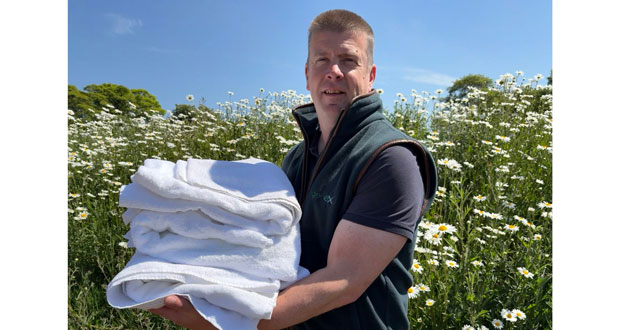
Regenex’s Technical Director, Paul Hamilton (pictured above), explained: “When Regenex first highlighted this figure, grabbing the attention of national media including ITV Good Morning Britain, the broadcast show debated, should there be a fake tan tax?
“Crazy as this sounds, a surcharge could be good idea – in the same way that guests pay extra for bringing their dogs on holiday, though it could be much harder to enforce.”
When self tanning, the same type of reaction occurs to human skin as during the baking and roasting of meat. Fake tan or self-tan is typically manufactured with one per cent dye, a significant concentration of colour. Dyes are usually synthetic and derived from petrochemicals.
While putting brown-tinged sheets in the washing machine at home can successfully remove the colour, commercial laundry processes cannot help but ‘fix’ the stains meaning repeated washings do not remove them.
Hamilton continued: “In 2023 we estimated that a fifth of the linens we processed were discoloured by fake tan. That proportion is now nearer a quarter, meaning that the cost to the industry has risen to £2.2 million.
“With outgoings for laundries rising across the board, from labour to replacement linen and utility bills, owners and managers are thinking harder about how they can minimise the impact of wrecked sheets, duvet covers, pillowcases and towels.”
Regenex processes stained and discoloured linen for many laundries across the UK, returning good items to stock that would otherwise have been condemned to rag or landfill. The company also provides overdyeing services for the minority of textiles for which staining is too heavy to be successfully removed. Using gentle multi-bath processes and recycling and recirculating hot water on site, Regenex treatment is helping hospitality brands to save money and minimise their carbon emissions.
The Textile Services Association estimates 2,000 tonnes of linen is discarded every year and 56 per cent of all linen in commercial laundry systems is from the hospitality industry.
Ruined linen typically processed by Regenex indicates that a quarter of the 1,120 tonnes of linen binned annually by hotels and holiday lets – totalling 280 tonnes – are marked with fake tan.
As new, good quality hospitality linen typically costs £8 per kilo, that’s a cost to the industry of £2.24 million – the volume equivalent of 250,000 sheets.