 Cleaning Hygiene Today Cleaning Hygiene Magazine
By Krzysztof Krajewski, Chief Sustainability and Innovation Officer, RDM Group
The cleaning products industry faces a packaging challenge. Consumers demand sustainable packaging, regulators are tightening restrictions, and many brands have made environmental commitments. Yet products like powder detergents still require robust moisture protection, often through plastic barriers and coatings.
These products live in humid environments like laundry rooms, bathrooms and kitchen cupboards under the sink. Water can easily spill out of a sink. People handle packaging with wet hands. Without adequate barrier protection, powder clumps, capsules degrade, and products become unusable or even hazardous. And customer satisfaction depends on packaging that works.
This predicament has created a challenge for brands committed to sustainability. The question isn’t whether to protect products properly, that’s non-negotiable. It’s about finding the right balance of materials that delivers both functionality and improved environmental outcomes.
Traditional solutions have served the industry well. Plastic packaging provides excellent protection, and plastic’s functional properties – its barrier performance, durability, and versatility – have made it invaluable across countless applications. The material itself isn’t the issue if recycled and reused correctly. The opportunity for cleaning brands lies in using it more strategically.
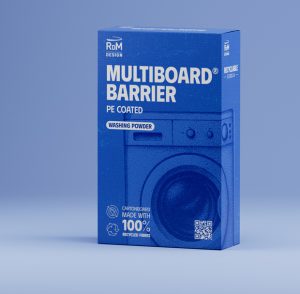 The real breakthrough is in optimisation rather than elimination. PE-coated cartonboard, which uses just three to five per cent plastic content on 100 per cent recycled fibres, provides the moisture barrier that detergents require while maximising the use of recyclable materials.
The thin PE layer leverages plastic’s strengths exactly where they’re needed. It’s heat-sealable, which eliminates the need for adhesives that complicate recycling. At under five per cent of the package weight, it meets strict thresholds set by demanding recycling systems, even by the rigorous standards of countries like Germany. The remaining 95 per cent is recycled cartonboard that feeds back into circular production loops.
That small plastic fraction gets managed within established paper collection streams, which in the EU achieve 87 per cent recycling rates. At RDM Group, we recovered nearly 90 per cent of pulper rejects in 2024.
This approach matters particularly for affordability. Premium detergent brands can invest in expensive packaging innovations. But many consumers buy discounted products, and they deserve effective sustainable options too. PE-coated board offers cost-effective protection that brings circular packaging principles to all price points, not just the premium segment.
The Packaging and Packaging Waste Regulation (PPWR) will reshape the landscape, requiring a higher standard of sustainable packaging that will force businesses to rethink materials, redesign product formats, and adopt more circular systems across the entire value chain. Brands can either view this as a constraint or as an opportunity to demonstrate that high performance and improved sustainability aren’t mutually exclusive. Smart material optimisation shows both are achievable, and there are plenty of innovative packaging materials on the market that ensure PPWR compliance, such as RDM Group’s own PE coated board.