 Cleaning Hygiene Today Cleaning Hygiene Magazine
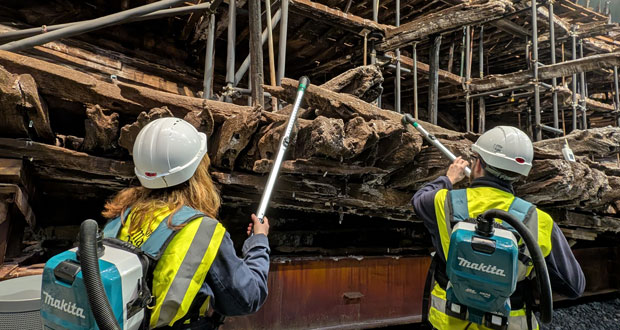
Makita Backpack vacuum cleaners are being used to clean the 500-year-old hull of the Tudor navy ship the Mary Rose at its dedicated museum in Portsmouth. The Makita vacuums provide manoeuvrability and flexibility for the museum staff to easily remove the dust from the surface of the delicate wreck.
Raised in October 1982 after 437 years on the sea floor, the Mary Rose, said to be King Henry VIII’s favourite ship, is one of the most significant and valuable naval artefacts of the Tudor age. The Mary Rose is kept and conserved by the charitable Mary Rose Trust, which operates the museum. Although the Mary Rose is housed in a controlled environment, dust accumulates on the surface of the hull and must be removed.
David Pearson, Conservation Manager at the Mary Rose Museum, explained: “We’ve found the most effective way of cleaning the hull is to carefully vacuum it. We had considered a corded cylinder vacuum, but it wasn’t going to provide the freedom and flexibility required, especially as for some areas of the cleaning, a mobile elevating work platform is required. The Makita cordless backpack vacuums have proven to be ideal for the task and allow our team to complete the work as quickly and easily as possible.”
The museum conservation team has now been using two Makita DVC261 twin 18v LXT backpack vacuums for around 6 years. The DVC261 delivers 36V performance with the two 18v LXT batteries used in series. It also features a high-efficiency brushless motor that minimises wasted energy and improves runtimes compared with a brushed motor.
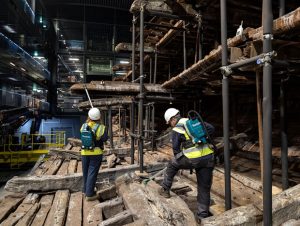 The museum identified a need for more batteries for the vacuums to improve productivity. Also, the team had previously inadvertently purchased some non-genuine batteries, which were not providing the expected runtimes. Following a request from the museum, Makita supplied the team with an 18v LXT Power Source Kit ahead of the most recent clean in September 2025. The Power Source Kit contains 2x BL1850 5Ah batteries and a charger. The additional batteries have helped the team to complete the clean, which takes around 40 hours in total, with fewer interruptions for charging.
Thomas Lanaghan, IOS Product Specialist at Makita said: “We are pleased that our backpack vacuums have been able to overcome the logistical challenges of this important but often unseen task. Given the importance of the work carried out by the museum and its status as a charitable trust, we were only too happy to support the team in this small way by providing the new batteries.”
The Mary Rose conservation team will be back vacuuming the ship again this summer. Visitors will be able to watch on from the galleries as the team delicately clean the 500-year-old timbers. For information of when – visit www.maryrose.org